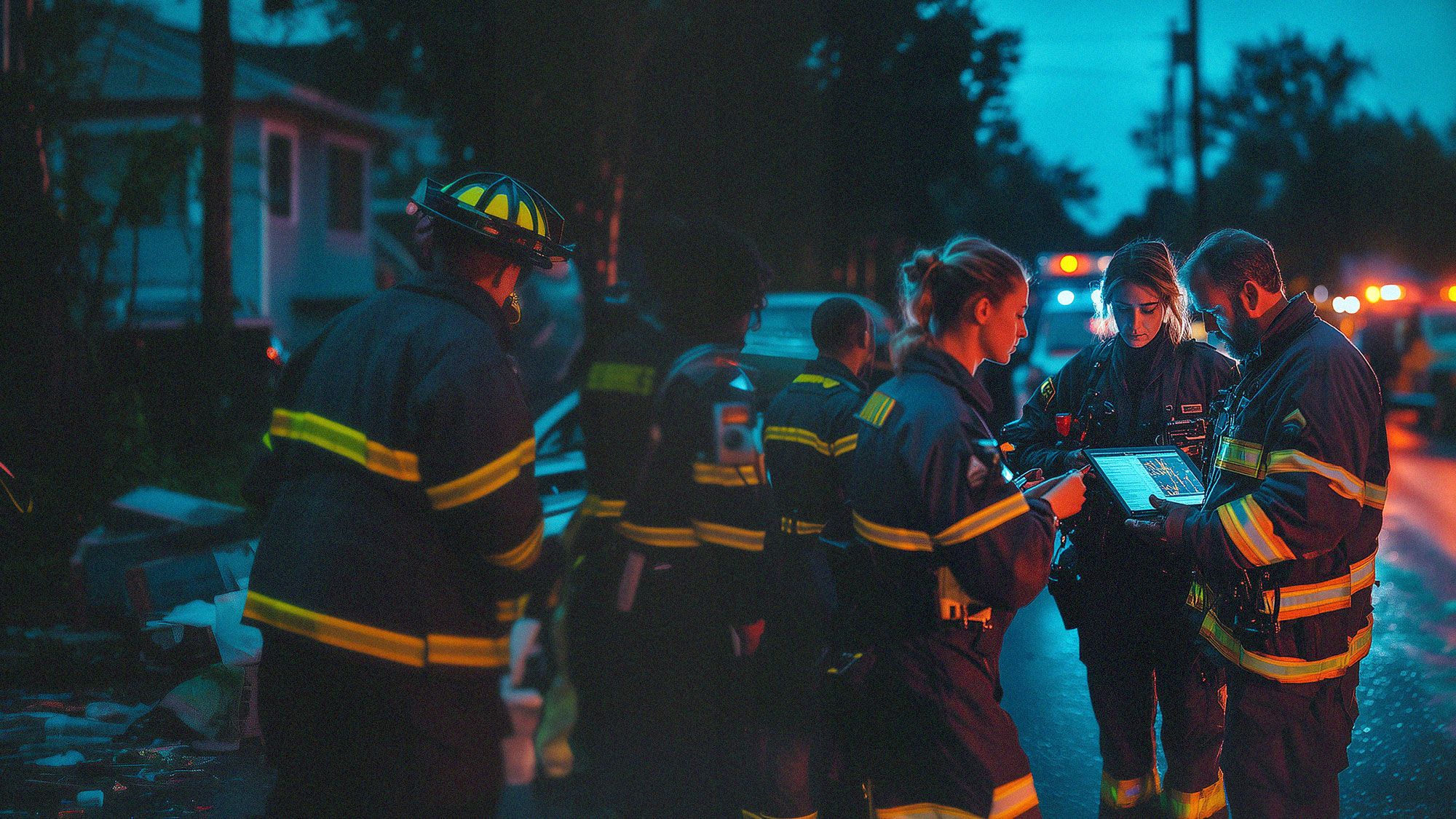
The anthropology of disasters is the study of how disasters are experienced, understood, and responded to within specific cultural, social, political, and historical contexts. Rather than seeing disasters as purely "natural" events, anthropologists argue that the impacts of hazards are shaped by human factors such as inequality, governance, infrastructure, history, and local knowledge.
A common phrase in the field is that "hazards are natural, disasters are social." For example, the same earthquake may cause relatively limited damage in one country but catastrophic loss of life in another because of differences in building standards, poverty, emergency planning, or political institutions.
Key ideas in the anthropology of disasters
- Vulnerability is socially produced. People are not equally exposed to disaster. Factors like poverty, race, gender, disability, age, land ownership, and political marginalization influence who is most affected.
- Local knowledge matters. Communities often possess detailed environmental knowledge, social networks, and coping strategies that outsiders may overlook.
- Disasters are political. Relief and recovery involve decisions about resource allocation, reconstruction, and whose needs are prioritized.
- Recovery is cultural as well as material. Rebuilding homes is only part of recovery; restoring livelihoods, social relationships, traditions, and identity is equally important.
How humanitarian relief organizations can inadvertently disrupt local community agency
Humanitarian organizations generally aim to save lives and reduce suffering. However, anthropologists have documented ways in which well-intentioned interventions can unintentionally weaken local decision-making or existing systems if they are not designed collaboratively.
1. Replacing rather than supporting local leadership
International organizations sometimes establish parallel systems for distributing aid instead of working through community leaders, local governments, neighborhood associations, or grassroots organizations.
Possible consequences include:
- reduced legitimacy of local institutions
- dependence on external organizations
- diminished community participation in decision-making
An alternative approach emphasizes supporting existing local capacities rather than substituting for them.
2. Assuming communities are passive victims
Early disaster response often portrayed affected populations primarily as recipients of aid. Anthropological research shows that survivors are usually active responders.
Communities frequently:
- organize search and rescue
- share food and shelter
- establish informal communication networks
- coordinate rebuilding long before outside responders arrive
Ignoring these capacities can sideline people who understand local priorities best.
3. Ignoring cultural practices
Standardized aid programs may conflict with local customs.
Examples include:
- housing designs that do not fit family structures
- food assistance containing unfamiliar or culturally inappropriate foods
- burial procedures that conflict with religious traditions
- recovery plans that overlook communal land tenure
Anthropologists argue that culturally informed assistance often leads to more sustainable recovery.
4. Distorting local economies
Large inflows of donated goods can unintentionally undermine local markets.
For example:
- free imported clothing may reduce sales for local merchants
- donated food can depress prices for local farmers
- international contractors may receive rebuilding contracts instead of local businesses
Many organizations now increasingly use cash transfers or local procurement when feasible because they can support local economic recovery while allowing households to prioritize their own needs.
5. Creating dependency
If external agencies provide services for extended periods without gradually transferring responsibility, communities may have fewer opportunities to rebuild their own institutions.
This does not mean humanitarian aid inherently creates dependency—many studies show emergency assistance is essential and does not inevitably produce long-term reliance. The concern is about designing aid to strengthen, rather than replace, local capacities.
6. Power imbalances in decision-making
Funding priorities often originate from donor governments or international organizations rather than affected communities.
This can result in:
- projects reflecting donor priorities
- short funding cycles that end before recovery is complete
- limited participation by local residents in planning
The concept of localization seeks to address this by shifting more funding and authority to local organizations.
Anthropological critiques of humanitarianism
Anthropologists do not generally reject humanitarian relief. Instead, they ask questions such as:
- Who decides what people need?
- Whose knowledge counts?
- Which groups receive aid first?
- How does aid reshape local power relationships?
- What happens after international organizations leave?
These questions highlight that aid is not only a technical exercise but also a social and political process.
A concrete example
After a major earthquake, an international organization might rapidly construct identical temporary shelters because they are efficient to produce.
From an engineering perspective, the shelters may be safe.
From an anthropological perspective, however, questions arise:
- Do they accommodate extended families common in the area?
- Can residents modify them using local materials?
- Are they located near livelihoods, schools, and religious spaces?
- Were community members involved in deciding where and how they were built?
If the answer to these questions is "no," the shelters may be technically successful but socially less effective.
Contemporary approaches
Many humanitarian organizations now emphasize approaches intended to preserve and strengthen local agency, including:
- Community-based disaster risk reduction (CBDRR): Communities identify hazards and develop their own preparedness strategies.
- Localization: Increasing funding, leadership, and decision-making authority for local organizations.
- Participatory planning: Involving affected communities in needs assessments, program design, implementation, and evaluation.
- Capacity strengthening: Investing in local institutions so they can lead future responses.
In summary
The anthropology of disasters argues that disasters are not simply natural events but are shaped by social structures, culture, and politics. From this perspective, humanitarian relief is most effective when it recognizes affected people as active participants rather than passive beneficiaries. Relief organizations can inadvertently disrupt local community agency by replacing local institutions, overlooking cultural practices, distorting local economies, or concentrating decision-making in external actors. Contemporary humanitarian practice increasingly seeks to mitigate these risks by emphasizing participation, localization, and partnerships that build on existing community strengths rather than superseding them.