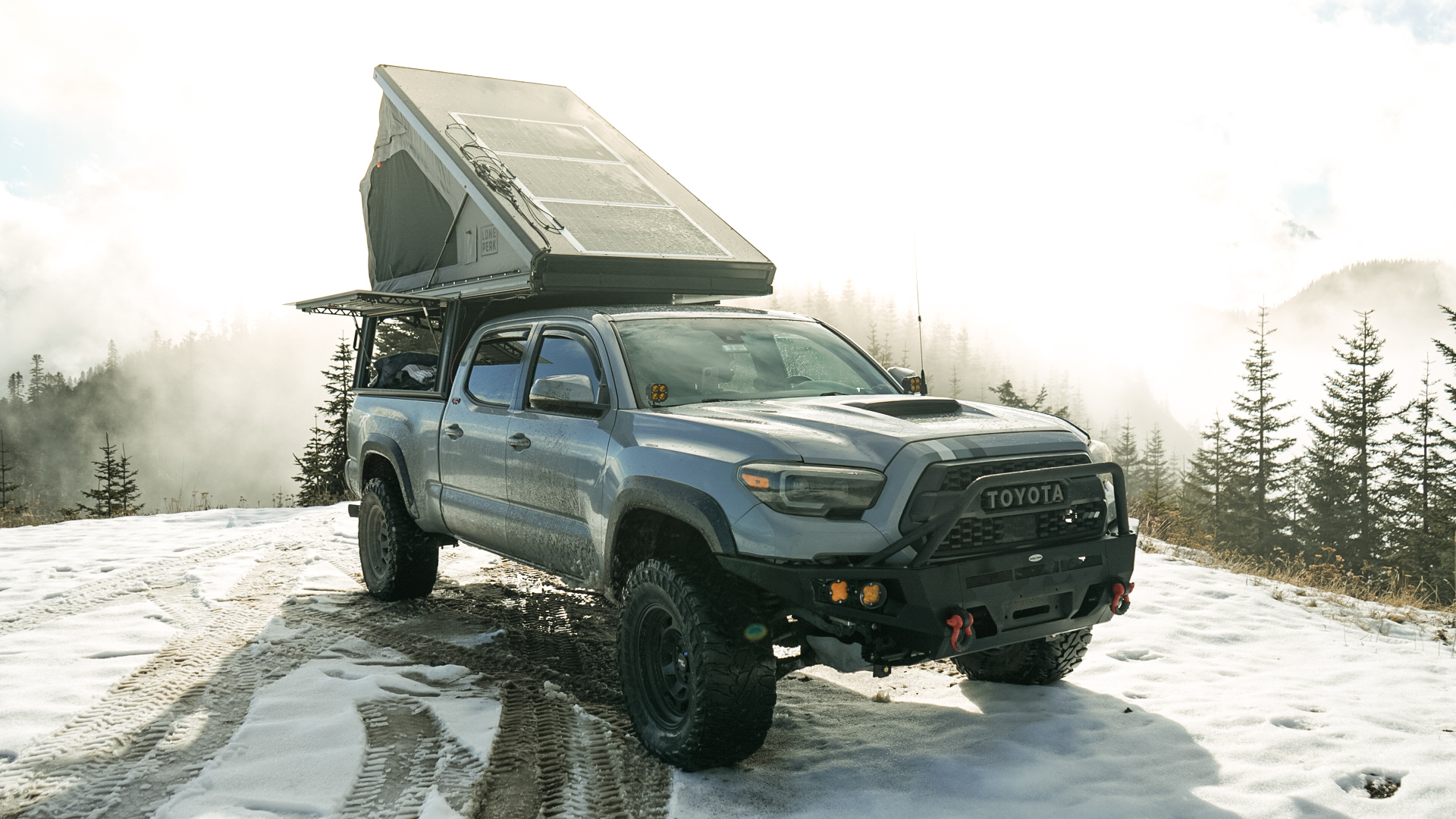
For most camping trips on public forest roads, people need less off-road capability than they expect and more on-road comfort than they initially prioritize. Since this will be your daily driver, it's worth optimizing for the 95% of miles you'll spend on pavement while ensuring it can handle the 5% on rough roads.
Here's how I'd think about it.
The capability hierarchy
1. Ground clearance (most important)
Ground clearance matters more than having an advanced four-wheel-drive system if you're mainly driving forest roads.
Aim for:
- 8–9 inches: Handles most maintained forest service roads.
- 9–10+ inches: Better if you frequently encounter deep ruts or washed-out sections.
The main goal is avoiding scraping the underside.
2. Tires
Good all-terrain or rugged all-season tires often make a bigger difference than upgrading from AWD to 4WD.
Look for:
- Stronger sidewalls to resist punctures
- Better grip on gravel and loose dirt
- Snow capability if you camp in colder seasons
Many crossovers become surprisingly capable with better tires.
3. AWD vs. 4WD
For your use case:
AWD is usually enough if you drive:
- Gravel roads
- Forest service roads
- Mud after rain
- Snow-covered roads
- Mild rocky terrain
4WD with low range becomes valuable if you expect:
- Large rocks
- Deep mud
- Steep technical climbs
- Deep sand
- Overlanding on difficult trails
Most campers never actually need low-range gearing.
4. Approach and departure angles
These determine whether you'll scrape the bumpers on dips or steep entrances.
They're nice to have but generally matter less than ground clearance unless you're tackling challenging trails.
Features that improve daily life
Don't overlook these:
- Comfortable seats
- Quiet highway ride
- Adaptive cruise control
- Good fuel economy
- Cargo space for camping gear
- Roof rack compatibility
- Reliability
- Good headlights
You'll appreciate these every day.
A practical "sweet spot"
For many campers, an ideal daily-driver camping vehicle has:
- AWD
- 8.5–9.5 inches of ground clearance
- Decent all-terrain or all-weather tires
- Full-size spare (or space for one)
- Good cargo area
- Recovery points (or at least a tow hook)
That combination reaches a huge percentage of campsites.
When you probably don't need a hardcore off-roader
Vehicles like dedicated body-on-frame SUVs excel on difficult trails, but they often come with tradeoffs:
- Worse fuel economy
- Harsher ride
- Larger turning radius
- More expensive maintenance and tires
If you're mostly driving to established campgrounds or dispersed camping sites via forest roads, those compromises may not be worthwhile.
Questions to ask yourself
The best vehicle depends on what your "rough forest roads" actually look like:
- Are they simply washboard gravel, or are there deep ruts and rocks?
- Do you camp year-round, including snow season?
- Do you travel alone, where getting stuck is a bigger concern?
- How many highway miles do you drive each week?
- Do you need to sleep inside the vehicle?
General recommendations by use case
| Your trips | Capability to prioritize |
|---|
| Mostly gravel forest roads | AWD + 8–9" clearance |
| Regular rough forest roads with ruts | AWD + 9–10" clearance + all-terrain tires |
| Deep mud, rocky trails, remote overlanding | 4WD with low range |
| 95% commuting, occasional camping | Comfortable crossover with AWD |
If you only remember one thing, make it this: ground clearance and tires are usually the biggest determinants of whether you can reach a campsite, while comfort, fuel economy, and reliability will have a much larger impact on your day-to-day satisfaction. For many people, a capable AWD crossover strikes the best balance between weekday commuting and weekend camping adventures.