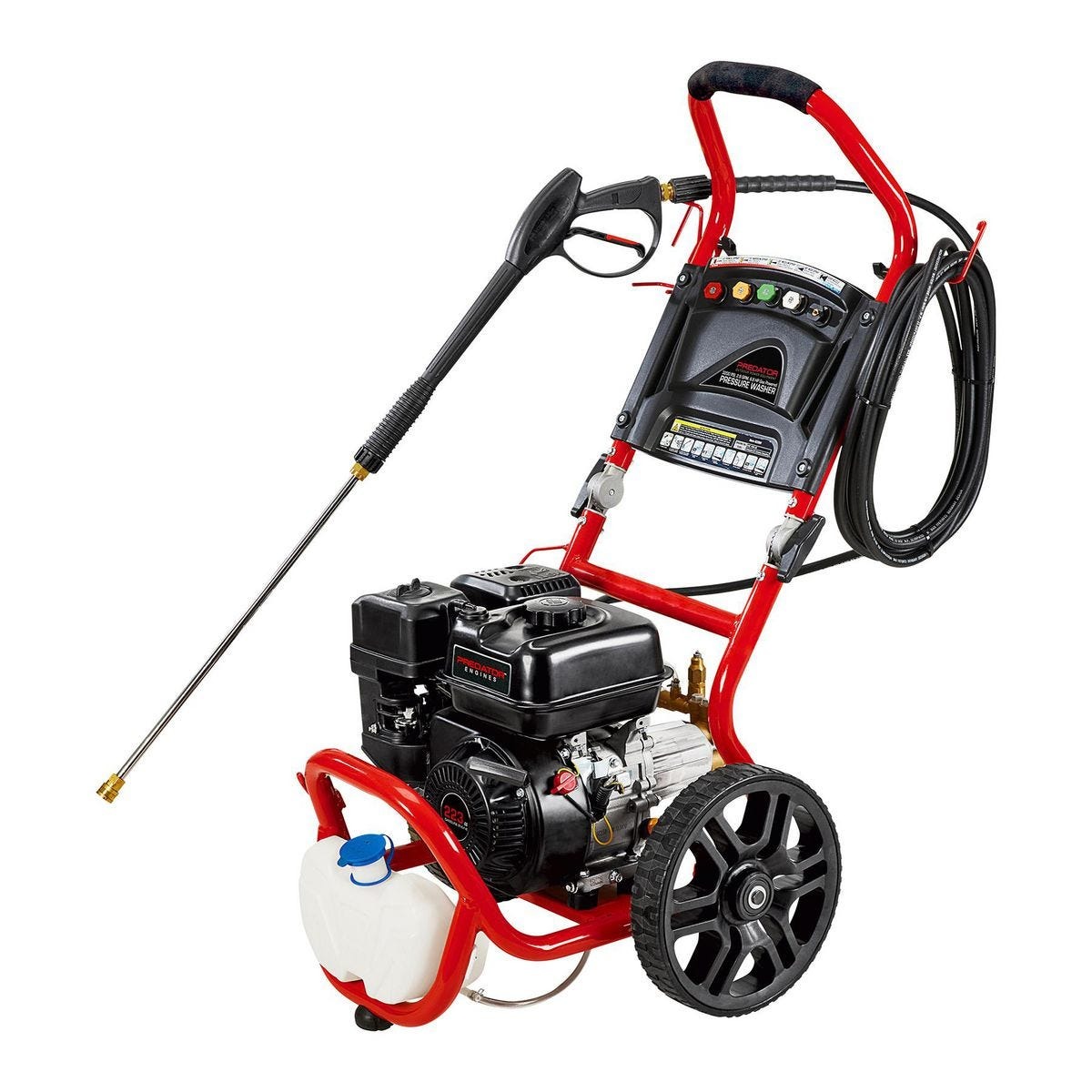
For those three surfaces, the sweet spot is usually a gas or electric pressure washer rated around 2,000–2,500 PSI with 1.8–2.5 GPM, ideally with interchangeable nozzles and an adjustable spray pattern.
Here's how that range works across your projects:
| Surface | Recommended PSI | Tips |
|---|
| Concrete driveway | 2,500–3,000 PSI (or lower if needed) | A surface cleaner attachment speeds up large driveways and leaves fewer streaks. |
| Vinyl siding | 1,200–1,800 PSI | Use a wide-angle (25° or 40°) nozzle and keep your distance. Spray downward to avoid forcing water behind the siding. |
| Wooden deck | 500–1,500 PSI | Use a 40° nozzle and maintain a consistent distance to avoid gouging the wood. Softer woods like cedar require extra care. |
Best all-around choice
A 2,300–2,500 PSI electric pressure washer is the most versatile option for most homeowners because it:
- Has enough power to clean concrete effectively.
- Can be dialed back with the correct nozzle for vinyl siding and wood.
- Is quieter and requires less maintenance than a gas model.
- Is easier to store and start.
When to choose gas instead
A 2,700–3,100 PSI gas pressure washer is worth considering if you:
- Have a very large driveway.
- Regularly clean heavy mildew or oil stains.
- Plan to use accessories like a large surface cleaner frequently.
Just be careful on wood and siding—you'll need to use a wider nozzle and keep the wand farther from the surface.
Features to look for
- Interchangeable quick-connect nozzles (0°, 15°, 25°, 40°, and soap)
- Adjustable pressure or variable spray if available
- At least 2.0 GPM for reasonable cleaning speed
- Surface cleaner attachment for concrete (highly recommended)
- Soap tank or downstream detergent injector for siding and decks
If you're buying only one machine for occasional home maintenance, I'd recommend:
- Electric: 2,300–2,500 PSI, around 2.0 GPM
- Gas: 2,800–3,000 PSI, around 2.5 GPM (if you have larger cleaning jobs)
That combination gives you enough cleaning power for concrete while still being controllable on vinyl siding and wood when you use the appropriate nozzle and technique.