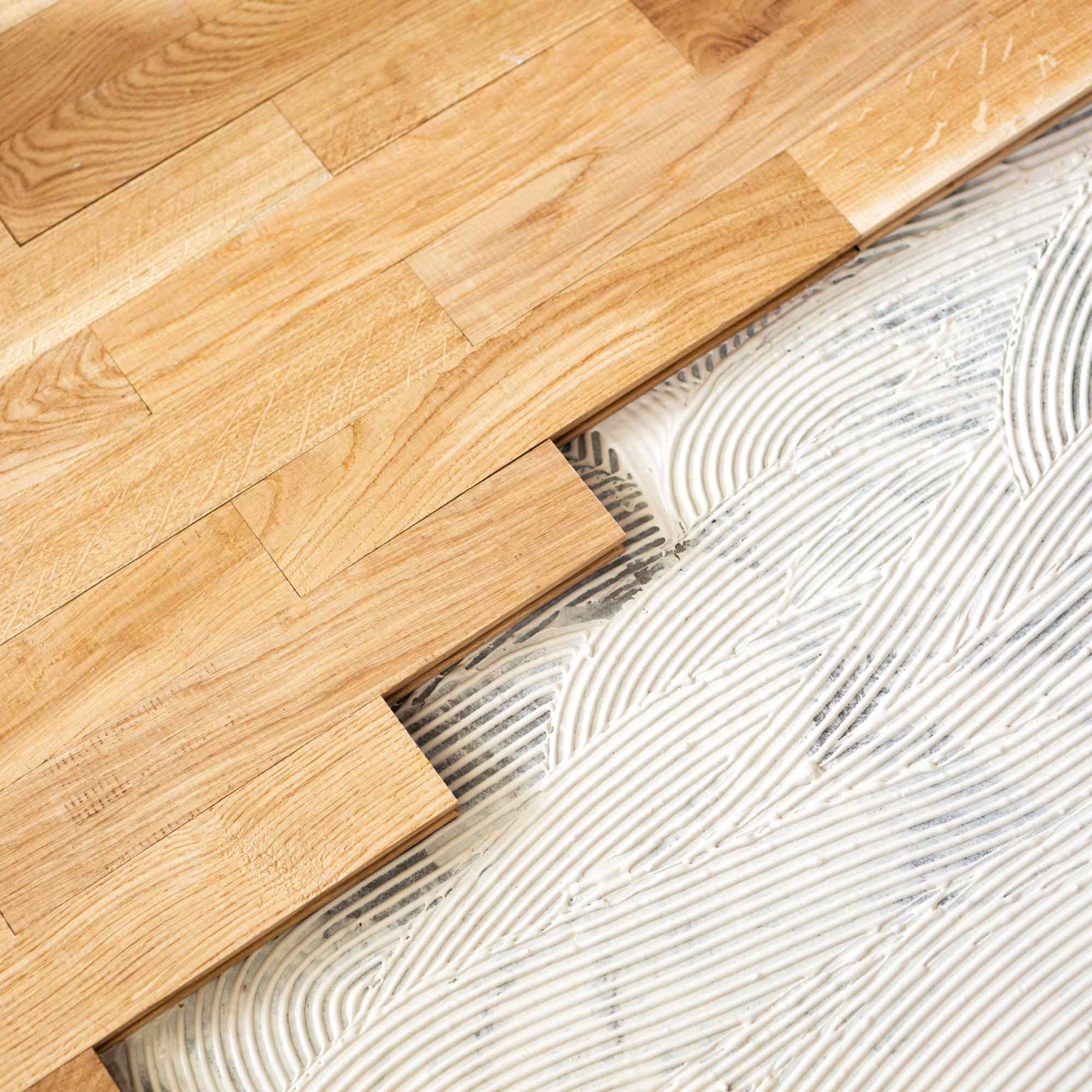
If you're replacing carpet throughout a main floor, you have several good options. The best choice depends on your budget, lifestyle, whether you have kids or pets, and the look you want.
Here's a comparison of the most common choices:
| Flooring | Typical Cost (materials) | Water Resistance | Durability | Comfort | Best For |
|---|
| Luxury Vinyl Plank (LVP) | $2–$7/sq ft | Excellent | Excellent | Softer underfoot | Families, pets, basements |
| Engineered Hardwood | $4–$12/sq ft | Moderate | Very good | Warm | Upscale look |
| Solid Hardwood | $5–$15+/sq ft | Low | Can last 100+ years | Warm | Long-term investment |
| Laminate | $1.50–$5/sq ft | Good (water-resistant versions available) | Good | Firm | Budget-conscious homeowners |
| Tile (porcelain/ceramic) | $2–$10/sq ft | Excellent | Excellent | Hard/cool | Warm climates, entryways |
| Cork | $3–$8/sq ft | Fair | Good | Very comfortable | Quiet homes, offices |
| Bamboo | $3–$8/sq ft | Fair | Good | Similar to hardwood | Eco-conscious buyers |
1. Luxury Vinyl Plank (LVP)
One of the most popular choices today.
Pros
- Waterproof
- Scratch-resistant options
- Comfortable to walk on
- Quiet compared to laminate
- Easy to clean
- Looks surprisingly similar to hardwood
Cons
- Doesn't add as much resale value as real wood
- Can dent from very heavy furniture
Best if you have
- Dogs
- Kids
- Active household
- Open-concept main floor
2. Engineered Hardwood
Real wood on top with a plywood core.
Pros
- Authentic hardwood appearance
- More stable than solid hardwood
- Better with seasonal humidity changes
- Adds resale value
Cons
- More expensive than LVP
- Can scratch
- Limited refinishing (depends on veneer thickness)
A great compromise if you want real wood without some of solid hardwood's drawbacks.
3. Solid Hardwood
The traditional premium flooring.
Pros
- Can be refinished multiple times
- Long lifespan
- Timeless appearance
- Strong resale appeal
Cons
- Sensitive to moisture
- Higher installation cost
- Scratches more easily than vinyl
Excellent if you're planning to stay in the home for many years.
4. Laminate
A budget-friendly wood-look option.
Pros
- Affordable
- Scratch resistant
- Easy installation
- Many attractive designs
Cons
- Can be damaged by standing water
- Cannot be refinished
- Often louder underfoot than LVP
Today's higher-end laminates are much better than older products.
5. Tile
Great for durability.
Pros
- Waterproof
- Extremely durable
- Excellent for kitchens and entryways
- Works well with radiant heat
Cons
- Hard on feet
- Cold unless heated
- Grout requires maintenance
Many people install tile only in bathrooms, mudrooms, or entryways rather than throughout an entire main floor.
6. Cork
Less common but comfortable.
Pros
- Soft
- Quiet
- Warm underfoot
- Renewable material
Cons
- Can dent
- Needs sealing
- Less resistant to moisture
Installation considerations
If you're replacing carpet, you'll also want to consider:
- Removing carpet and padding
- Repairing or leveling the subfloor if needed
- Choosing new baseboards or installing quarter-round if you keep existing trim
- Matching floor height to adjoining rooms
- Door trimming if the new flooring is thicker
Cost example
For a 1,000 sq ft main floor (including installation), rough estimates are:
- LVP: $5,000–$10,000
- Laminate: $4,000–$8,000
- Engineered hardwood: $8,000–$16,000
- Solid hardwood: $10,000–$20,000+
- Tile: $9,000–$20,000+
Costs vary by region, subfloor condition, and the complexity of the installation.
If it were my decision...
For most homeowners, I'd narrow it to these three:
- Best overall: Luxury Vinyl Plank (LVP) for durability, water resistance, and value.
- Best premium choice: Engineered hardwood for the look and feel of real wood with better stability than solid hardwood.
- Best long-term investment: Solid hardwood if you plan to stay in the home for decades and are comfortable with the maintenance.
If you tell me:
- approximately how many square feet your main floor is,
- your budget,
- whether you have pets or kids,
- and whether you're planning to stay in the home long-term,
I can recommend a flooring type—and even specific thicknesses and wear layers—that would fit your situation.