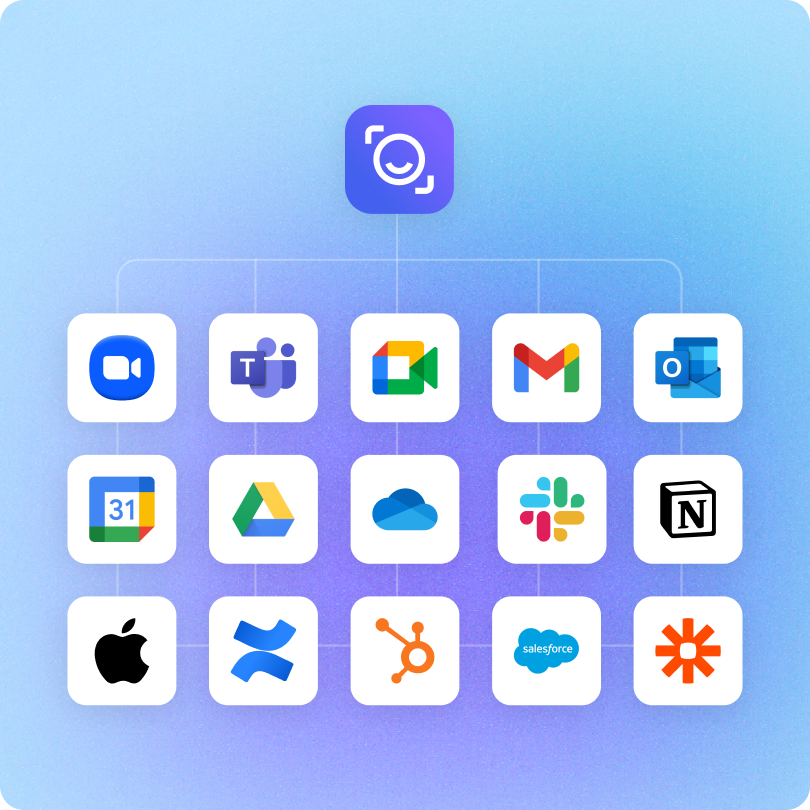
Yes. This is one of the areas where AI can provide immediate value because the bottleneck usually isn't taking notes—it's converting discussion into structured work and ensuring it ends up in the right systems.
A typical AI-powered follow-through workflow looks like this:
-
Capture the meeting
- Record the meeting or collect notes.
- AI generates a transcript and summarizes the discussion.
-
Extract actionable items
Instead of just listing bullet points, AI identifies:
- Tasks
- Decisions
- Open questions
- Risks or blockers
- Follow-up commitments
For example, from:
"Sarah will update the pricing deck by Friday, and Mike needs to review it before Monday."
AI can produce:
- Task: Update pricing deck
- Task: Review pricing deck
- Owner: Mike
- Due: Monday
- Dependency: Sarah's update
-
Create work items automatically
Rather than leaving action items in a meeting document, AI can create:
- Jira issues
- Asana tasks
- Trello cards
- Monday.com items
- Linear issues
- Microsoft Planner tasks
- ClickUp tasks
The AI can populate fields such as:
- Title
- Description
- Assignee
- Due date
- Priority
- Labels
- Related project or sprint
-
Handle ambiguity
Good AI workflows can recognize uncertainty.
For example:
"Someone should talk to legal."
Instead of creating a poor task, AI might flag:
- Needs clarification: Owner not specified.
Or ask:
- Who owns this?
- When is it due?
-
Send follow-ups
After the meeting, AI can:
- Email or message each participant with only their assigned actions
- Notify people in Slack or Teams
- Update CRM records
- Log customer follow-ups
-
Track completion
AI can periodically compare:
- Meeting commitments
- Actual tasks in the project management tool
If an agreed action never became a tracked task—or remains incomplete—it can remind the owner or flag it for the next meeting.
Where organizations see the biggest improvement
The greatest benefit often comes from connecting AI directly to the systems teams already use. Instead of creating "another place to look," the AI becomes a bridge between meetings and execution.
For example:
| Meeting output | AI action |
|---|
| Decision made | Update project documentation |
| New task | Create Jira ticket |
| Customer request | Create CRM follow-up |
| Bug discussed | Create engineering issue |
| Deadline agreed | Add due date and reminder |
| Risk identified | Add to project risk register |
Best practices
To keep the process reliable:
- Have AI draft tasks, but allow a quick human review before creating them automatically for high-impact projects.
- Use a consistent meeting format so owners and due dates are easier to identify.
- Configure rules (for example, "all engineering tasks go to Jira; all sales follow-ups go to the CRM").
- Track confidence and flag uncertain assignments rather than guessing.
When implemented well, AI shifts from simply summarizing meetings to acting as an operational assistant that converts conversations into structured, trackable work with much less manual effort. This helps reduce the common gap between "we agreed to do it" and "it's actually in the system being tracked."