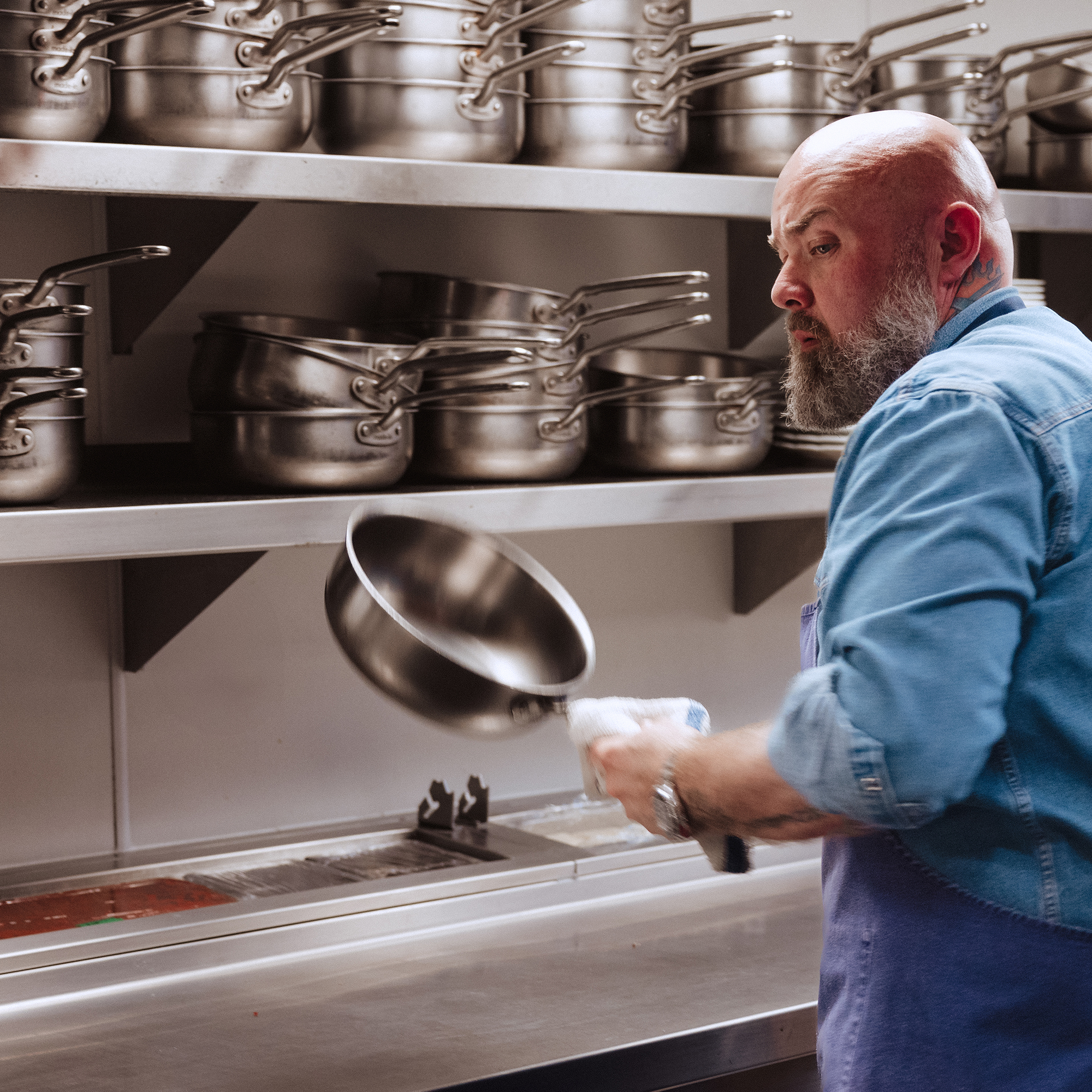
If you're replacing everything at once, it's worth focusing less on the number of pieces and more on the materials and whether the set matches how you cook. Many large "15-piece" sets include multiple lids and duplicate pans that don't add much value.
Here are the main things to consider:
1. Cookware material (the biggest decision)
Stainless steel (best all-around for most people)
- Durable and long-lasting.
- Great for browning meat and making pan sauces.
- Dishwasher-safe on many models.
- Doesn't react with acidic foods.
- Requires a little more oil and technique to prevent sticking.
Best if you cook a wide variety of meals and want cookware that can last decades.
Hard-anodized aluminum with nonstick coating
- Very easy to cook with.
- Excellent for eggs, pancakes, fish, and delicate foods.
- Heats evenly.
- Nonstick coatings eventually wear out (typically after several years depending on use).
Best if convenience matters most.
Carbon steel
- Naturally develops a nonstick surface with seasoning.
- Excellent for high-heat cooking.
- Lightweight compared with cast iron.
- Requires some maintenance.
Great for people who like searing and stir-frying.
Cast iron
- Incredible heat retention.
- Nearly indestructible.
- Heavy.
- Needs seasoning unless enameled.
Usually better as a specialty pan than an entire set.
Copper
- Outstanding temperature control.
- Expensive.
- Often requires more maintenance.
Mostly for enthusiasts.
2. Multi-ply construction
If you choose stainless steel, look for:
- 3-ply (tri-ply) at minimum
- Aluminum or copper core
- Fully clad construction (the heat-conducting layers extend up the sides)
This gives much more even heating than pans with only a disk on the bottom.
3. The pieces you'll actually use
A practical set usually includes:
- 8-inch skillet
- 10- or 12-inch skillet
- 2- to 3-quart saucepan with lid
- 4- to 6-quart sauté pan with lid
- 6- to 8-quart stockpot with lid
That's enough for most households.
4. Oven safety
Look for cookware that's oven-safe to at least:
- 500°F (260°C) for stainless steel
- 400–500°F (204–260°C) for many nonstick sets
Metal handles generally tolerate higher temperatures than plastic or silicone.
5. Cooktop compatibility
If you have an induction cooktop, make sure the cookware is induction-compatible (magnetic base).
Gas and electric ranges work with almost everything.
6. Handle comfort
This often gets overlooked.
- Comfortable to grip.
- Securely riveted or well attached.
- Balanced when the pan is full.
- Stay reasonably cool on the stovetop.
7. Lid quality
Glass lids let you monitor food without lifting the lid but can be more fragile.
Stainless steel lids are generally more durable and oven-safe at higher temperatures.
8. Weight
Heavier isn't always better.
- Very light cookware can heat unevenly.
- Extremely heavy cookware can be tiring to use.
If possible, pick up a 10-inch skillet before buying.
9. Warranty
A lifetime warranty on the cookware body is a good sign, though nonstick coatings often have separate, more limited coverage.
How much should you spend?
- $150–300: Good quality nonstick or entry-level clad stainless.
- $300–600: Excellent tri-ply stainless that can last decades.
- $600+: Premium cookware with refinements in finish, ergonomics, and performance.
For many home cooks, the $300–500 range offers excellent long-term value.
My recommendation for most people
Instead of buying an all-nonstick set, consider:
- A tri-ply stainless steel set for most cooking.
- One separate high-quality nonstick skillet (8- or 10-inch) for eggs and other delicate foods, replacing only that pan when the coating eventually wears out.
This combination gives you the durability of stainless steel while keeping the convenience of nonstick where it matters most.
If you tell me:
- your budget,
- whether you have gas, electric, or induction,
- and how many people you usually cook for,
I can recommend specific cookware sets that fit your needs.