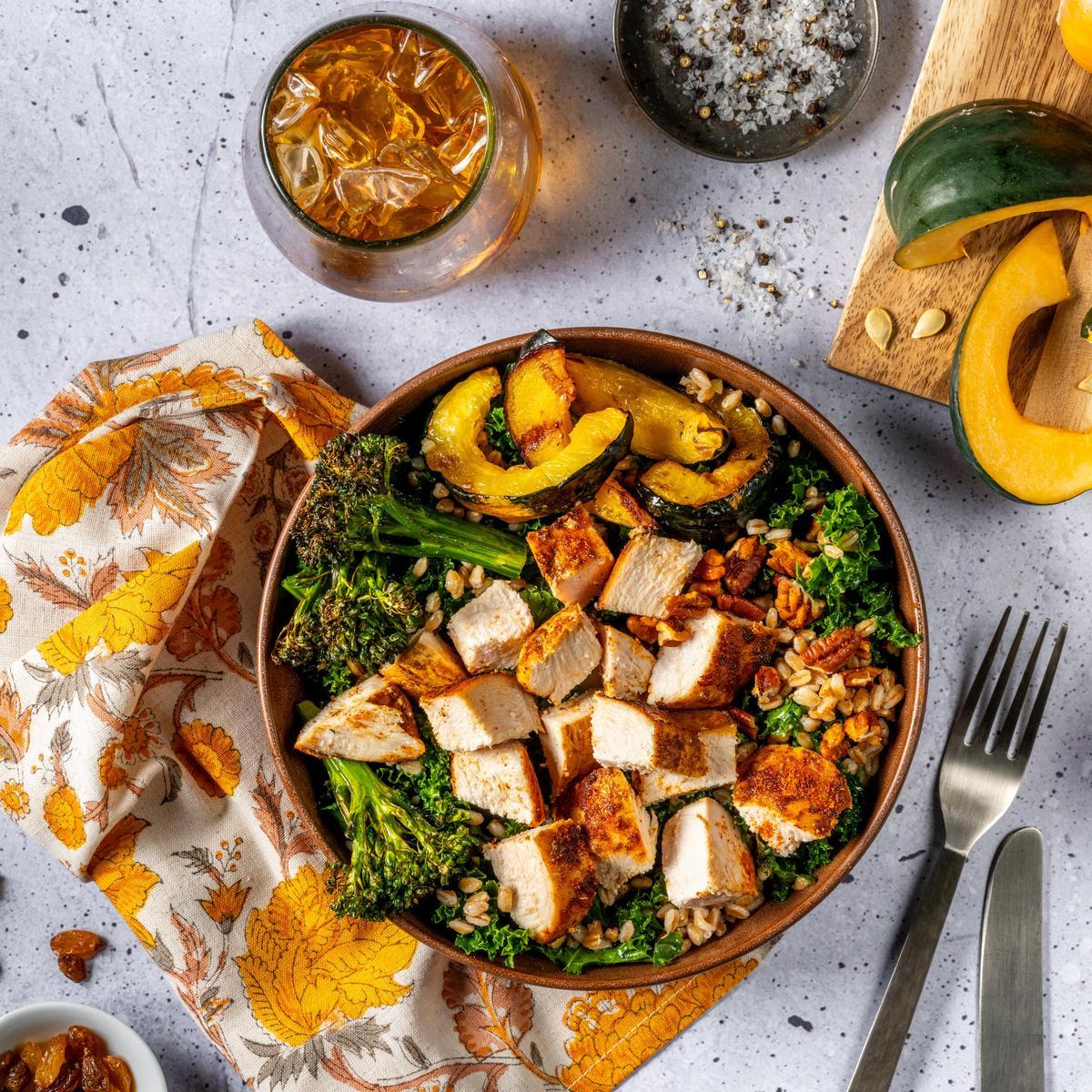
That happens to a lot of people after the first few months. It's easy to settle into a rotation of a handful of reliable meals, and then suddenly realize you're making the same pasta, curry, or stir-fry every week.
One of the easiest ways to build variety is to plan by format rather than by specific recipe. For example:
| Day | Meal style | Example |
|---|
| Monday | Grain bowl | Brown rice, roasted broccoli, crispy tofu, peanut sauce |
| Tuesday | Mexican-inspired | Black bean tacos with cabbage slaw and avocado |
| Wednesday | Pasta | Spinach, mushrooms, white beans, lemon, and parmesan |
| Thursday | Soup or stew | Lentil soup with crusty bread |
| Friday | Curry | Chickpea and sweet potato coconut curry |
| Saturday | Homemade pizza | Mushrooms, peppers, olives, mozzarella |
| Sunday | "Use-it-up" meal | Fried rice, frittata, or vegetable stir-fry |
This keeps dinners feeling different even if you reuse ingredients.
Another trick is to rotate your protein instead of your recipes:
- Chickpeas
- Black beans
- Lentils (red, green, or brown)
- Tofu
- Tempeh
- Edamame
- Eggs (if you eat them)
- Greek yogurt or cottage cheese (if you eat dairy)
Then rotate your carb base:
- Rice
- Quinoa
- Potatoes
- Sweet potatoes
- Pasta
- Couscous
- Noodles
- Tortillas
And rotate the flavor profile:
- Mediterranean (olive oil, lemon, herbs, feta)
- Indian (garam masala, curry, ginger)
- Thai (coconut milk, lime, peanut)
- Mexican (lime, cumin, chipotle)
- Japanese (soy sauce, sesame, miso)
- Middle Eastern (tahini, sumac, za'atar)
- Korean-inspired (gochujang, sesame)
The same vegetables can taste completely different depending on the seasoning.
It's also worth introducing one completely new ingredient each week. You might try:
- Tempeh
- Halloumi
- Farro
- Barley
- Red lentils
- Butter beans
- Miso paste
- Harissa
- Gochujang
- Tahini
Those small additions can unlock dozens of new combinations.
For example, a varied week could look like:
- Crispy tofu rice bowls with peanut-lime sauce
- Mushroom and spinach lasagna with a side salad
- Lentil shepherd's pie
- Falafel wraps with cucumber yogurt sauce
- Sweet potato and black bean enchiladas
- Thai red curry with vegetables and tofu
- Shakshuka with crusty bread (if you eat eggs)
Finally, consider keeping a "recipe bank." Whenever you find a dinner you genuinely enjoy, save it in a note or spreadsheet under categories like "30 minutes," "meal prep," "comfort food," or "company." Once you have 30–40 favorites, you can build weekly meal plans by mixing categories instead of searching for new recipes every week.
If you'd like, I can also put together a 4-week vegetarian dinner plan with minimal ingredient waste, so the meals share produce and pantry items without feeling repetitive.