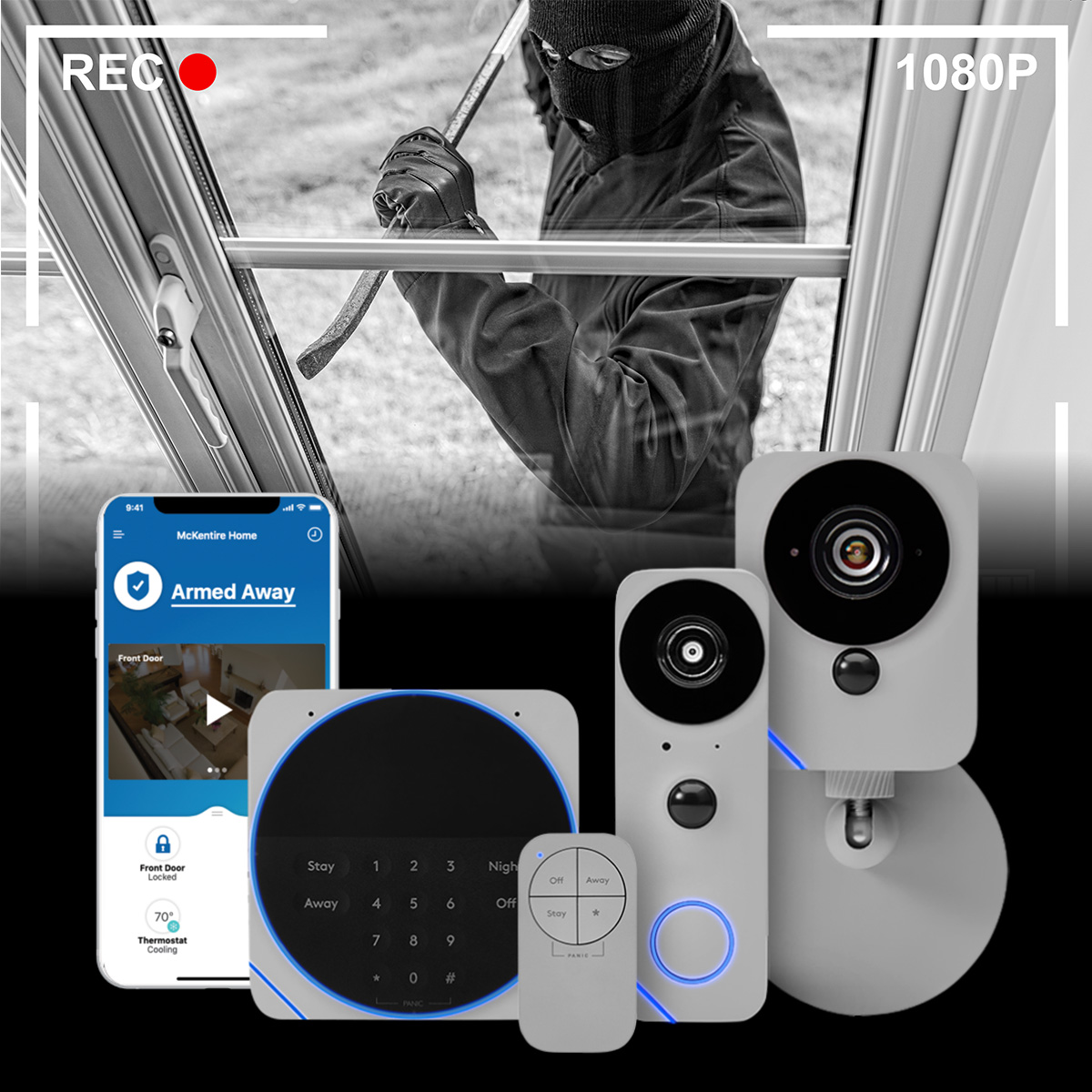
The biggest mistake people make is buying a bunch of cameras and calling it a security system. Cameras are useful for evidence, but sensors and a monitored alarm are what actually help detect and respond to a break-in.
For most homes, I'd recommend this layered approach:
1. Start with an alarm system (highest priority)
At minimum, get:
- Door/window sensors on every exterior door and accessible first-floor window
- 1–2 motion sensors covering main hallways or living areas
- A loud indoor siren
- Cellular backup if possible (works even if internet goes down)
- Optional professional monitoring
A strong DIY choice is:
SimpliSafe Mid-Sized Home Security System
It's consistently rated among the best DIY systems because it's easy to install, expandable, and doesn't require long-term contracts.
2. Add cameras where they matter
Most homes don't need cameras everywhere.
I'd prioritize:
- Front door (video doorbell)
- Driveway
- Backyard/patio
- One indoor camera facing the main entry (optional if you're comfortable with indoor cameras)
A good outdoor option:
Eufy SoloCam S340
It offers high-quality video and local storage, helping reduce ongoing subscription costs.
For a budget indoor camera:
Wyze Cam v4
Recent reviews highlight improvements like better image quality and on-device AI features.
3. Install a video doorbell
This is often the single most useful camera.
Popular options include:
- Eufy Security Video Doorbell 2K
- Ring Battery Doorbell Pro
- Ecobee Smart Doorbell Camera
Choose one that fits the ecosystem you plan to use.
4. Consider professional monitoring
If you travel frequently or want someone to contact emergency services when an alarm triggers, monitoring is worth considering.
If you're usually home and are comfortable receiving alerts yourself, self-monitoring may be enough. Many modern systems let you switch between the two without contracts.
5. Don't forget non-camera security
Some of the best upgrades are inexpensive:
- Smart deadbolt
- Motion-activated exterior lights
- Reinforced strike plates with 3-inch screws
- Window locks
- Smoke/CO detectors integrated into the security system
- Water leak sensors near water heaters, washing machines, and sinks
These often prevent more damage than cameras do.
Which ecosystem?
- Want the easiest overall experience: SimpliSafe
- Already use Alexa devices: Ring
- Want fewer monthly fees and local video storage: Eufy
- Want excellent smart-home integration: Abode
If you tell me:
- whether you own or rent,
- the size of your home (apartment, townhouse, single-family),
- and your budget (around $300, $700, or $1,500+),
I can suggest a specific shopping list with the right number of sensors and cameras.