Yes. Once the basic 3-email sequence is competent, the bigger gains usually come from changing the recovery system—not writing a fourth email.
-
Fix the reason they're abandoning
This is the highest-leverage move. Current Baymard research puts unexpected costs, slow delivery, trust, forced account creation, and checkout complexity among the major abandonment drivers.
- Show shipping/tax/fees before the final step.
- Put the actual delivery date in the cart.
- Make guest checkout prominent.
- Add the payment methods customers actually use.
- Preserve form data after errors.
- Remove unnecessary fields.
If someone abandons because shipping suddenly adds $18, a better recovery email is mostly treating the symptom.
-
Trigger recovery based on behavior, not just time
Don't treat every abandoned cart identically.
Examples:
- High-intent: reached payment → aggressive, fast recovery.
- Low-intent: added product but never started checkout → slower nurture.
- Repeat customer: emphasize convenience/history rather than persuasion.
- First-time visitor: address trust, returns, shipping, reviews.
- High-AOV cart: reassurance/consultation rather than a blanket discount.
- Product-specific objections: dynamically answer likely questions.
-
Add SMS—but use it as a different channel
Email #1 → SMS → email #2 is generally more interesting than simply adding more email.
The SMS should be extremely short and transactional-feeling: “Still thinking about [product]? Your cart is saved here → …”
Don't immediately train customers to expect a coupon.
-
Recover on-site before they leave
For users showing exit intent, test:
- cart reminder
- shipping reassurance
- returns guarantee
- social proof
- low-friction “save my cart”
- email/SMS capture
Importantly, don't plaster a discount popup over everyone. Baymard specifically cautions that persuasion tactics can't compensate for underlying checkout friction.
-
Use personalized retargeting
Build audiences from the actual abandoned cart, not merely product-page visitors.
For example:
Day 0: dynamic product ad
Day 1: testimonial/UGC ad
Day 3: objection killer (shipping, returns, guarantee)
Day 5+: offer, if economically justified
And suppress people immediately after purchase so you're not advertising yesterday's purchase back to them.
-
Experiment with the incentive architecture
Don't just A/B test “10% off vs 15% off.”
Test:
- free shipping vs percentage discount
- dollar discount vs percentage
- first-order incentive vs cart-specific incentive
- incentive only after a second abandonment
- minimum-spend threshold
- gift/freebie instead of price reduction
- no incentive for returning customers
Measure incremental profit, not recovered revenue. A 15% discount can make your “recovery rate” look fantastic while making contribution margin worse.
-
Make the recovery link frictionless
This is surprisingly important.
Clicking the recovery message should restore the exact cart and drop the shopper back into checkout—not send them to your homepage or product page where they have to reconstruct the purchase.
On mobile, make sure the checkout is equally forgiving. Baymard's research finds that perceived complexity and form friction remain substantial abandonment sources.
-
Create a “why did you leave?” intercept
For a statistically useful sample of abandoners, ask one question:
“What stopped you from completing your order today?”
Give 5–7 options + “Other.”
You'll often discover something your analytics can't: shipping shock, payment failure, uncertainty about sizing, delivery timing, needing approval from someone else, etc. Analytics can tell you where they left; qualitative feedback helps explain why.
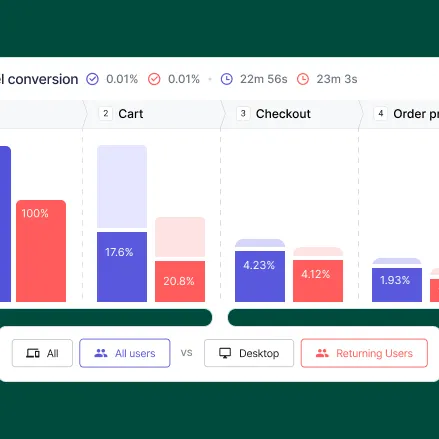
Then segment abandonment by stage, device, new/returning customer, AOV, product category, traffic source, and payment method.
If 60% of your “abandoners” never actually intended to buy, squeezing another email into the sequence won't do much. Baymard's 2026 data, for example, finds 42% of US shoppers reported abandoning because they were simply browsing/not ready to buy.
Those tend to have much more upside than turning a 3-email flow into a 5-email flow.