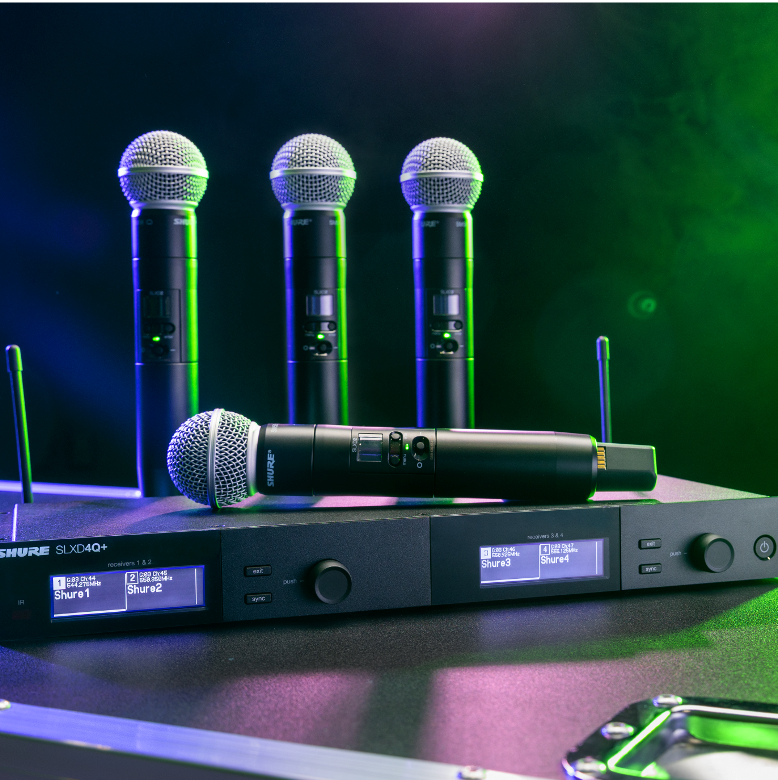
For a noisy room, a dynamic microphone is usually the better choice.
Here's a quick comparison:
| Feature | Dynamic Microphone | Condenser Microphone |
|---|
| Background noise | Picks up less | Picks up more |
| Sensitivity | Lower | Higher |
| Best for | Untreated rooms, live vocals, streaming | Treated studios, detailed recordings |
| Requires phantom power | Usually no | Usually yes (48V for XLR models) |
Why dynamic mics work better in noisy rooms
Dynamic microphones are less sensitive than condensers, so they tend to capture:
- More of your voice.
- Less keyboard noise, fan noise, air conditioning, traffic, and room echo.
- Less reverberation from untreated walls.
The microphone type isn't the only factor, though. Getting the mic close to your mouth (about 2–6 inches / 5–15 cm) has an even bigger impact on reducing background noise.
When a condenser is a good choice
A condenser microphone is better if:
- Your room is acoustically treated.
- You want maximum detail and clarity.
- You're recording vocals, acoustic instruments, or voice-over in a quiet environment.
In a noisy room, however, that extra sensitivity usually becomes a disadvantage because it captures more of the surrounding sounds.
Popular examples
Dynamic microphones
- Shure SM7B – Excellent for podcasts and streaming in untreated rooms.
- RØDE PodMic – Affordable and designed for spoken voice.
- Audio-Technica ATR2100x-USB – USB/XLR hybrid that's beginner-friendly.
- Shure MV7 – USB/XLR hybrid with built-in processing options.
Condenser microphones
- Audio-Technica AT2020 – Great entry-level studio condenser.
- RØDE NT1 – Very detailed, best in a quiet room.
Bottom line
If your room has fans, street noise, roommates, echo, or other background sounds, choose a dynamic microphone. Combined with close mic placement and noise suppression software, it will usually produce cleaner voice recordings than a condenser in the same environment.